01 / Knowledge directory
87 topics across the tradition.
Texts, concepts, practices, cosmology, history, medicine, and martial arts. Each with a summary and essay exploring the depth.
All 87 topics, grouped by category
01 / Texts & Scriptures · 19
Sacred texts and philosophical works.
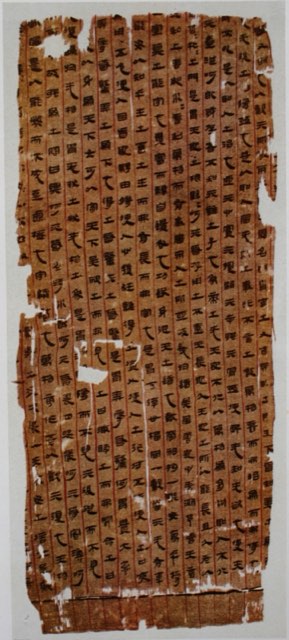
The Daodejing (Tao Te Ching)
The foundational text of Taoism, traditionally attributed to Laozi. Eighty-one short poems on the nature of the Way (Tao), its manifestations (Te/virtue), and the principle of non-action (wu wei). The text has been read as mystical philosophy, political counsel, and personal cultivation guide across two thousand years.
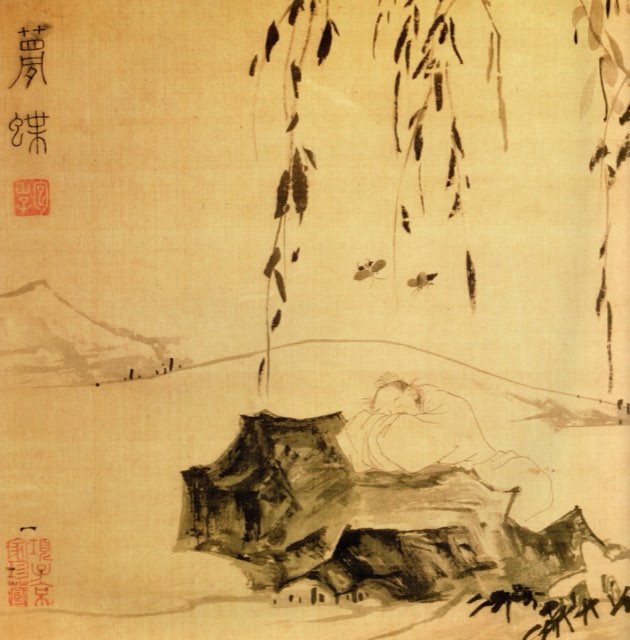
The Zhuangzi — Masters of Paradox
Allegorical tales, dialogues, and meditations traditionally attributed to Zhuangzi (4th century BCE). Richer in storytelling than the Daodejing, it explores the limits of language, the relativity of human values, and liberation through forgetting the self.
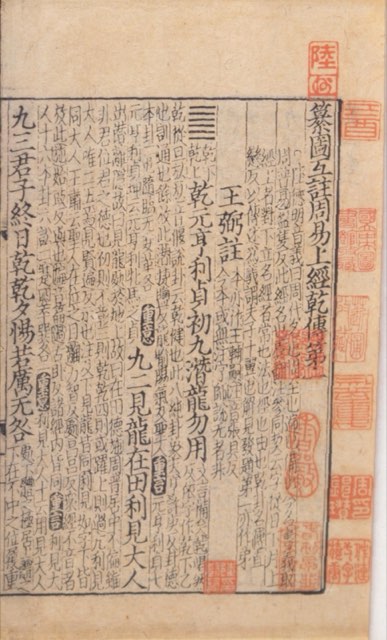
The Yijing (I Ching) — Book of Changes
The oldest Chinese classic, predating Confucianism and Taoism but foundational to both. A manual of divination based on 64 hexagrams representing cosmic conditions and transformations. Studied for divination, philosophical wisdom, and as a map of how change operates in nature and human affairs.
Huangdi Neijing — Yellow Emperor's Inner Classic
Foundational medical text compiled over centuries (pre-200 BCE), attributed to the Yellow Emperor. Integrates Taoist philosophy with medicine: qi circulation, yin-yang balance, five-element correspondences, and the relationship between inner spiritual state and health.
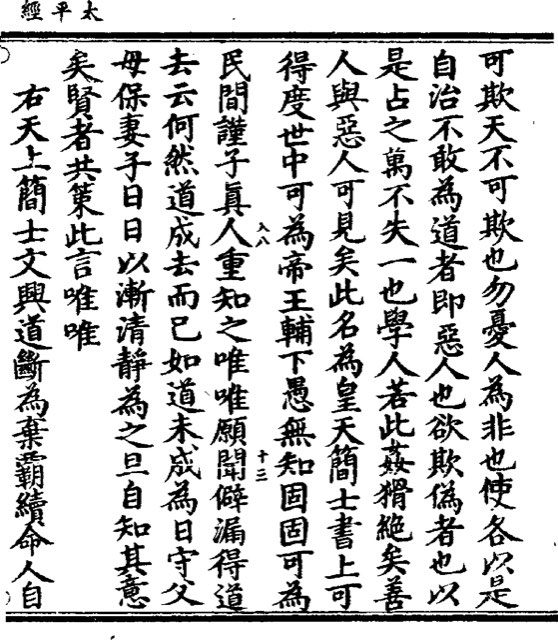
Taiping Jing — The Classic of Great Peace
A vast revealed scripture (600+ scrolls in original form) claiming heavenly origin, central to early religious Taoism and the Yellow Turban rebellion. Teaches that a coming age of Great Peace (Taiping) will restore cosmic harmony, and that the virtuous can accelerate this transformation.
Shangqing Scriptures — Highest Clarity Revelation
Heavenly revelation texts claimed to originate from the Highest Clarity (Shangqing) heaven, received by Maoshan adepts in the 4th-5th centuries CE. Core to the Maoshan tradition, they teach cosmic hierarchies, inner deity visualization, and transcendence through understanding celestial bureaucracies.
Lingbao Scriptures — Numinous Treasure Texts
Revealed texts of the Numinous Treasure (Lingbao) tradition, claiming to originate from the pre-cosmic era. Emphasize celestial sounds, divine names, and the power of sacred language. Central to organized Taoist religion and ritual.
Daozang — The Taoist Canon
The collected scriptures of religious Taoism, compiled by imperial order. Some 1,487 distinct texts bound into 5,305 fascicles (juan), organized into eight categories. A comprehensive record of Taoist theology, ritual, cosmology, and practice across 1500 years.
Huangdi Yinfu Jing — Secret Talisman of the Yellow Emperor
A concise esoteric text (400 characters) attributed to the Yellow Emperor, teaching the hidden principles of cosmic operation. Central to Taoist magic and talismanic practice.
Daodejing Versions — Mawangdui, Guodian, and the Received Text
Three major textual witnesses to the Daodejing survive: the Guodian bamboo slips (c. 300 BCE, earliest), the Mawangdui silk manuscripts (c. 200 BCE), and the received text used for two millennia. Comparing them reveals a text that grew and was edited over centuries.
Daozang Organization — The Three Caverns and Four Supplements
The Taoist Canon organizes its roughly 1,487 texts (bound across 5,305 fascicles) into a system called the Three Caverns and Four Supplements — a classification scheme reflecting Taoism's own understanding of revelation hierarchy rather than a simple library catalog.
Guanzi Neiye — Inner Cultivation, the Text Before Taoism
A chapter within the Guanzi compendium, possibly predating the Daodejing, describing techniques for cultivating a settled mind and refined qi. Often considered the earliest surviving text on breath-based meditation in the Chinese tradition.
The Liezi — Tales of Transformation and Fatalism
A collection of parables and philosophical dialogues traditionally attributed to Lie Yukou, though the received text was likely compiled or heavily edited around the 4th century CE. Known for stories exploring fate, transformation, and the limits of human control.
The Secret of the Golden Flower — Late Inner Alchemy Synthesis
A Ming-dynasty inner alchemy text, later famous in the West through Richard Wilhelm's translation with a commentary by Carl Jung. Synthesizes Taoist, Buddhist, and Confucian elements into a practical meditation manual centered on cultivating the 'golden flower' of consciousness.
The Baopuzi — Ge Hong’s Compendium of Immortality
A 4th-century compendium by the scholar-alchemist Ge Hong, divided into esoteric ('inner') chapters on achieving immortality through alchemy and cultivation, and exoteric ('outer') chapters on conventional ethics and statecraft.
Zhengao — Declarations of the Perfected
A compilation by Tao Hongjing (456-536 CE) of transcribed revelations reportedly received by the visionary Yang Xi from perfected immortals decades earlier, forming a foundational text of the Shangqing tradition and a remarkable primary record of a religious visionary experience.
Zhouyi Cantongqi — The Kinship of the Three
Attributed to Wei Boyang (2nd century CE), this dense and deliberately cryptic text correlates Yijing cosmology, external alchemy, and inner cultivation into a single unified system. Considered the foundational text bridging external and internal alchemy traditions.
Zuowanglun — Treatise on Sitting and Forgetting
A systematic Tang-dynasty meditation manual by Sima Chengzhen (647-735 CE), organizing the practice of zuowang described briefly in the Zhuangzi into a structured seven-stage path suitable for sustained instruction.
Modern Taoist Scholarship — From Colonial Misreading to Critical Recovery
The 20th and 21st centuries saw Taoism transformed from a poorly understood, often dismissively categorized 'folk superstition' in Western and even much Chinese academic writing into a serious field of textual, historical, and anthropological study.
02 / Concepts & Philosophy · 21
Core ideas and metaphysical principles.
Qi — Vital Essence and Cosmic Energy
The fundamental life force in Taoist cosmology and medicine. Not "energy" in the Western sense but a more subtle concept: breath, vapor, presence, potentiality. Circulates through meridians, transforms through cultivation, connects individual and cosmos.
Hun and Po — The Dual Soul
In Taoist psychology, the human being contains two souls: Hun (ethereal, yang) and Po (corporeal, yin). At death they separate. Cultivation aims at reuniting them in immortality.
Jing-Qi-Shen Trinity — Essence, Energy, Spirit
The three treasures of cultivation. Jing (essence) transforms to Qi (energy) through practice, which transforms to Shen (spirit), which returns to the Void. The fundamental pathway of Taoist spiritual development.
Te (德) — Virtue as Authentic Power
Te is not moral virtue but authentic power—the way a being naturally expresses its deepest nature. When Te aligns with Tao, power flows effortlessly. Central to understanding Daodejing's teachings.
Wu Wei (無為) — Non-Action, Effortless Action
The central Taoist principle of non-forcing, non-striving, acting in alignment with circumstances. Not passivity but action that flows from deep attunement to the Tao.
Three Realms (San Jie) — Cosmic Structure
The Taoist vision of reality: Heaven Realm (light, yang), Earth Realm (manifest, balanced), and Water Realm (dark, yin). Each ruled by a sovereign deity, each governs specific aspects of existence.
Yin-Yang — Beyond Duality
The dynamic complementary forces underlying all existence. Not simple opposites but interdependent, containing each other, eternally flowing between states. More subtle than Western understanding.
Five Elements (Wu Xing) — Cosmology and Correspondences
The five phases of transformation (wood, fire, earth, metal, water) that organize all phenomena. Each corresponds to organs, emotions, seasons, directions, flavors, and countless other categories.
Ziran (自然) — Spontaneity and Natural Simplicity
Acting according to one's true nature without forcing or conditioning. The Taoist ideal of authentic spontaneity that emerges when mental artifice falls away.
The Tao as Ultimate Reality
Beyond its role as an ethical or practical guide, the Tao names the ultimate ground of reality itself — ineffable, prior to all distinction, yet the source from which the differentiated world of the 'ten thousand things' continuously emerges.
Wu (無) — Emptiness as Generative Potential
Far from mere absence or nihilistic void, wu names a generative emptiness — the unmanifest potential from which all manifest existence continuously arises, and the quality cultivated in meditation as the ground of clear perception.
Yuan Qi — The Original, Undifferentiated Breath
The primordial, unified qi existing prior to its differentiation into yin and yang, and prior to the subsequent generation of the five elements and the ten thousand things — cosmologically first, and the deepest layer sought in advanced inner alchemy practice.
The Eight Trigrams (Bagua) — Building Blocks of Change
Eight three-line combinations of solid (yang) and broken (yin) lines, each representing a fundamental natural phenomenon and family relationship. Combined in pairs, they generate the 64 hexagrams of the Yijing.
Pu (樸) — The Uncarved Block
The image of unworked wood — full of unlimited potential before a craftsman shapes it into one specific, limited thing — names the Taoist ideal of returning to original simplicity, before social conditioning narrows a person into a fixed role.
Gui Gen (歸根) — Returning to the Root
The Daodejing's image for the cyclical return of all phenomena to their source: the ten thousand things flourish, then each returns to its root, a pattern the sage recognizes as 'constancy' and aligns with rather than resisting.
Ming (命) — Fate, Destiny, and Allotted Life
A complex term spanning 'fate' imposed from beyond one's control, 'destiny' as one's proper unfolding path, and 'lifespan' as the allotted duration of a life — the tension between accepting ming and actively cultivating longevity runs throughout Taoist thought.
Inner Landscape — The Body as Microcosmic Universe
Taoist cosmology holds that the human body mirrors the structure of the greater cosmos in miniature: bodily organs correspond to stars, internal energy pathways to rivers and mountain ranges, and the practitioner's interior to a landscape populated by resident deities.
Xing (性) — Original Nature and Spiritual Essence
The innate, original nature each being possesses prior to conditioning and distortion — closely related to Buddhist concepts of buddha-nature, xing names the pure spiritual essence that cultivation practice aims to recover and clarify rather than construct anew.
Longevity Versus Immortality — Two Distinct Goals
Chang sheng (extended life/longevity) and bu si (not dying/immortality) name related but distinct aspirations within the tradition, with considerable historical debate over whether literal physical deathlessness is the genuine goal or a misunderstanding of a more subtle spiritual transformation.
Wuji and Taiji — From Limitless Void to Supreme Polarity
Wuji names the boundless, undifferentiated state prior to all polarity; Taiji ('supreme ultimate,' the famous yin-yang symbol) names the moment of first differentiation into complementary opposites, from which the entire manifest cosmos subsequently unfolds.
Bu Er (不二) — Beyond Subject and Object
The most advanced stage of Taoist realization is often described as transcending even the fundamental distinction between subject and object, self and world, observer and observed — a state of non-duality echoed in and partly shaped by dialogue with Buddhist thought.
03 / Practices & Cultivation · 18
Meditation, ritual, and training methods.
Neidan — Inner Alchemy Microcosmic Circuit
The foundational inner alchemy practice: circulating energy through Ren (front) and Du (back) meridians connecting perineum to crown. Transforms jing into qi, qi into shen, shen into void.
Taiji (Tai Chi) — Origins and Philosophical Foundations
The "Supreme Ultimate" fist art, integrating Taoist philosophy into martial movement. Not merely exercise but a pathway to embodying wu wei and understanding yin-yang through direct practice.
Zuowang (坐忘) — Sitting and Forgetting
The foundational meditation practice: sitting in stillness while progressively forgetting the body, thoughts, and distinction between self and world. Returns consciousness to its original purity.
Qigong — Energy Cultivation through Breathing and Movement
Methods of cultivating and circulating qi through breathing techniques, postures, and visualizations. Ranges from gentle health practices to advanced energy work.
Five Organ Alchemy — Internal Organ Qi Transformation
Transforming the qi of the five organs through visualization, sound, emotion transmutation, and energy circulation. Each organ has specific channels of refinement.
Dantian (丹田) — Energy Centers and Cultivation
The three primary energy centers: lower (mingmen at kidney level), middle (solar plexus), upper (between eyebrows and crown). Each governs different aspects of cultivation.
Ritual Offerings (Gongyang) — Communing with Deities
Formal offerings of incense, wine, and food to celestial deities, ancestors, and land spirits. A bridge between human and divine realms, expressing gratitude and maintaining cosmic balance.
Talismans (Fu) — Drawn Power and Protection
Sacred diagrams combining celestial writing, divine names, and geometric patterns. When properly drawn by initiated priests, they activate celestial forces for protection, healing, and influence.
Zuowu — Sitting in Emptiness
A meditative state beyond zuowang's forgetting: not merely releasing categories and body-awareness but resting directly in awareness itself, prior to any object of attention arising within it.
Neiguan — Inner Visualization Practice
The practice of visualizing the body's inner landscape, resident deities, and energy pathways in vivid mental detail — central to Shangqing tradition meditation, used to communicate with inner divinities and guide energetic transformation.
Death Meditation — Rehearsing the Great Transition
Advanced inner alchemy practice includes deliberate meditation on and rehearsal of the process of death — visualizing the separation of hun and po, the gathering of consciousness into the spirit-body — to prepare for a conscious, favorable transition rather than a disoriented one.
Jiao — The Grand Offering Festival
The most elaborate form of Taoist communal ritual: a multi-day festival of purification, cosmic renewal, and offering to the celestial hierarchy, performed by ordained priests on behalf of an entire community, temple, or region.
Zhai — Purification and Fasting Rites
Fasting and purification observances preceding major ritual undertakings — dietary restriction, sexual abstinence, and bathing rites intended to cleanse both practitioner and ritual space of impurity before approaching celestial authority.
Ancestor Veneration — Sustaining the Family Across Death
Regular ritual attention to deceased family members — offerings at household altars, tomb-sweeping visits, and seasonal festivals — reflecting the belief that the family bond and mutual obligation continue meaningfully across the boundary of death.
Exorcism and Spiritual Protection
Ritual specialists address malevolent spirits, disruptive ghosts, and harmful qi through a combination of talismanic protection, ritual combat, and negotiated resolution — a significant professional function of Zhengyi tradition priests historically and today.
Daoyin — Guiding and Stretching Exercises
One of the oldest documented Chinese exercise traditions, combining stretching, self-massage, and breath coordination to 'guide' qi through the body — archaeological evidence (the Mawangdui Daoyin Illustrations) documents specific postures dating to the 2nd century BCE.
Baguazhang — Walking the Eight Trigrams
An internal martial art built around continuous circular walking, embodying the eight trigrams' transformational logic directly in combat footwork and technique — developed in the 19th century, attributed to Dong Haichuan.
Wuqinxi — The Five Animal Frolics
A qigong sequence attributed to the physician Hua Tuo (2nd century CE), imitating the movement qualities of tiger, deer, bear, monkey, and crane — each animal targeting specific organ systems and qi qualities.
04 / Cosmology & Deities · 10
Universe structure, celestial beings, symbolism.
36 Heavens — Celestial Hierarchy
The Taoist vision of 36 celestial realms arranged in six ascending tiers, each with governors, inhabitants, and specific qualities. Understanding them allows navigation of afterlife and celestial communication.
Grotto-Heavens (Dong Tian) — Inner Sacred Dimensions
Legendary paradises hidden within sacred mountains. Taoists believe that mountains contain inner dimensions—grotto-heavens of perfect harmony accessible to worthy practitioners through meditation or pilgrimage.
Jade Emperor — Celestial Administrator
The supreme administrator of the cosmos under the Three Pure Ones. Manages celestial bureaucracy, judges morality, records deeds. Central to understanding how the universe maintains order.
The Three Pure Ones — Supreme Trinity of Taoist Cosmology
The three highest deities in the Taoist pantheon, representing successive emanations or aspects of the Tao itself: the Jade Pure One, the Highest Pure One, and the Grand Pure One — standing above and beyond the celestial bureaucracy the Jade Emperor administers.
Diyu — The Underworld Realms and Judgment
The Chinese underworld, substantially shaped by Buddhist influence, comprises ten courts of judgment, each governed by a king who assesses different categories of wrongdoing before determining the deceased's next destination or rebirth.
Beidou — The Nine Stars of the Northern Dipper
The Big Dipper constellation, personified as nine stellar deities governing individual destiny and lifespan. Petitioning the Beidou deities, particularly through the popular Doumu (Mother of the Dipper) cult, remains a significant devotional practice.
Sacred Numbers in Taoist Practice
Specific numbers — three, five, seven, nine, and their multiples — carry structured cosmological significance throughout Taoist practice, from the Three Pure Ones and Five Elements to the Nine Heavens and the 81 chapters of the Daodejing.
The Four Symbols — Dragon, Tiger, Phoenix, Turtle
Four symbolic creatures — the Azure Dragon, White Tiger, Vermilion Bird (phoenix), and Black Tortoise — govern the four cardinal directions and appear throughout Taoist cosmology, temple architecture, feng shui, and inner alchemy imagery.
Color Symbolism in Taoist Ritual
Colors carry specific cosmological associations tied to the five elements and cardinal directions, governing everything from temple decoration and priestly vestments to the choice of paper for talismans.
The Lunar Calendar and Taoist Festival Cycle
Taoist religious life follows the traditional lunar calendar, with specific dates marking deity birthdays, seasonal transitions, and major ritual observances — a cyclical structure of sacred time distinct from and predating the modern solar calendar's dominance.
05 / History & Movements · 10
Periods, sects, and key figures.
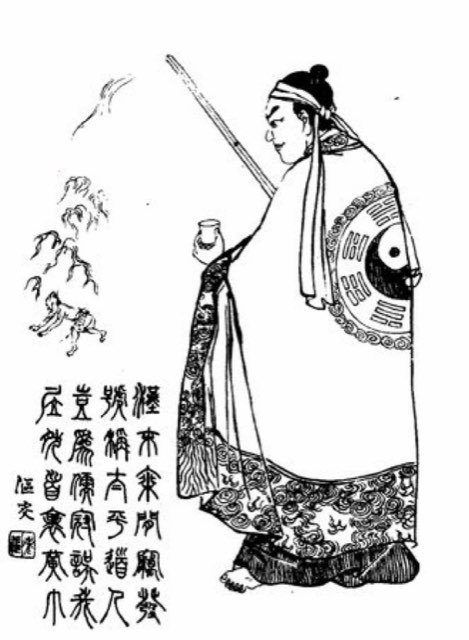
Yellow Turban Rebellion — First Mass Religious Movement
The 184 CE uprising led by Zhang Jue combining Taoist messianism with social revolution. First organized religious Taoism, establishing priesthood, hierarchy, and ritual structure.
Five Pecks of Rice — Zhang Daoling's Theocracy
The first organized Taoist sect (142 CE) established by Zhang Daoling in Sichuan. Initiated the practice of paying "five pecks of rice" as membership dues. Established priesthood and theological hierarchy.
Quanzhen — Complete Perfection School
The monastic Taoist school founded by Wang Chongyang in 1167 CE. Emphasized vegetarianism, monasticism, celibacy, and inner alchemy. Became the dominant Taoist school in North China.
Tang Dynasty — The Golden Age of Taoism
The Tang (618-907 CE) was Taoism's peak. Imperial patronage, state ritual support, literati integration. Created the Daozang canon, produced major texts and philosophers.
Pre-Qin Roots — Shamanism, Naturalism, and Early Philosophy
Before the Daodejing and Zhuangzi crystallized into recognizable texts, several currents — southern shamanic tradition, naturalist philosophy, and political strategic thought — fed into what would become identified as Taoist philosophy.
Six Dynasties — The Age of Revelation
The politically fragmented Six Dynasties period (220-589 CE) saw an extraordinary flowering of new Taoist revelation, producing the Shangqing and Lingbao scriptural traditions that would shape organized Taoism for the following millennium.
Song Dynasty — Institutional Consolidation and New Movements
The Song dynasty (960-1279 CE) saw significant imperial patronage, the consolidation of the Daozang's compilation, and the emergence of new ritual movements (Shenxiao, Qingwei, Tianxin) that reorganized Taoist liturgical practice around thunder-magic and exorcistic ritual.
Ming-Qing Era — Canon Compilation and Gradual Institutional Decline
The Ming dynasty produced the surviving Daozang compilation, while both Ming and Qing periods saw Taoism's gradual institutional marginalization relative to state-favored Confucian orthodoxy, even as folk-level practice remained vigorous.
20th Century — Disruption, Suppression, and Diaspora Survival
The 20th century brought severe disruption to mainland Chinese Taoism through war, revolution, and particularly the Cultural Revolution, while Taiwan and diaspora communities preserved living lineages that would later support the tradition's gradual mainland revival.
Zhengyi and Quanzhen — Comparing the Two Great Branches
Organized Taoism's two surviving major lineages differ substantially in practice, organization, and emphasis — Zhengyi's married, ritual-specialist priesthood versus Quanzhen's celibate, monastic, inner-alchemy-focused tradition — while sharing a common textual and cosmological heritage.
06 / Medicine & Health · 3
Healing and longevity practices.
Daoist Medicine — Prevention and Harmony
Medicine grounded in Taoist philosophy: health as balance, prevention as supreme, disease as disharmony. Integration of inner alchemy with herbal and acupunctural methods.
Herbal Alchemy — Ginseng, Ganoderma, and the Materia Medica
Taoist medicine developed an extensive pharmacological tradition of tonic herbs believed to support qi and jing cultivation — ginseng, ganoderma (lingzhi), and numerous mineral and botanical substances classified by their alchemical and medicinal properties.
Feng Shui — Siting Homes and Temples in Harmony with Qi Flow
The practice of analyzing and arranging built and natural environments to optimize favorable qi flow — literally 'wind and water' — governing the siting of homes, temples, and graves according to landscape features, compass direction, and the Four Symbols' cardinal associations.
07 / Martial Arts & Movement · 2
Internal and external physical traditions.
Taiji Lineages — Chen, Yang, Wu, and Sun Styles
Taijiquan developed into several distinct family styles, each with characteristic differences in posture, pace, and emphasis, tracing back through documented lineage to the Chen family village where the art's systematic practice is most reliably historically attested.
Xingyiquan — Form and Intention Boxing
The third classical internal martial art, built around direct, linear power generation through five fundamental fist forms corresponding to the five elements, emphasizing explosive, committed engagement rather than Baguazhang's evasive circling or Taiji's yielding.
08 / Lineages & Transmission · 4
Schools, ordination, and teaching lines.
Maoshan — The Highest Clarity Mountain Lineage
Centered at Mount Mao in Jiangsu province, the Maoshan lineage transmits the Shangqing revelations received by Yang Xi and compiled by Tao Hongjing, maintaining an unbroken tradition of elite meditative and visionary practice across some sixteen centuries.
Longmen — The Dragon Gate Lineage of Quanzhen
The most widespread surviving Quanzhen sub-lineage, founded through Qiu Chuji's teaching line, headquartered at Beijing's White Cloud Temple and serving as the institutional base for the contemporary state-recognized China Taoist Association.
Master-Disciple Transmission — How Lineages Actually Continue
Beyond textual study, Taoist lineages traditionally depend on direct, often extended personal transmission from an accomplished master to carefully selected disciples — a relationship involving formal initiation, graduated teaching, and significant reciprocal obligation.
Daoist Priesthood — Ordination, Ranks, and Responsibilities
Formal Taoist priesthood involves graduated ordination conferring specific ritual authority and textual access, marked by the transmission of 'registers' (lu) listing the spirits and celestial officials a priest is authorized to command.
Keep going
See the lineages that carry these teachings, the figures they describe, and the places where they are practiced.