Texts & Scriptures
The Zhuangzi — Masters of Paradox
Allegorical tales, dialogues, and meditations traditionally attributed to Zhuangzi (4th century BCE). Richer in storytelling than the Daodejing, it explores the limits of language, the relativity of human values, and liberation through forgetting the self.
If the Daodejing is Taoism's spine, the Zhuangzi is its wild heart—playful, irreverent, and profoundly liberating.
Structure: Inner and Outer Chapters
The text survives as 33 chapters. Scholars identify an "inner chapter" core (chapters 1-7) closest to the historical Zhuangzi, with outer and miscellaneous chapters added by later hands. Unlike the Daodejing's aphorisms, the Zhuangzi employs fables, paradoxes, and character exchanges to transmit understanding.
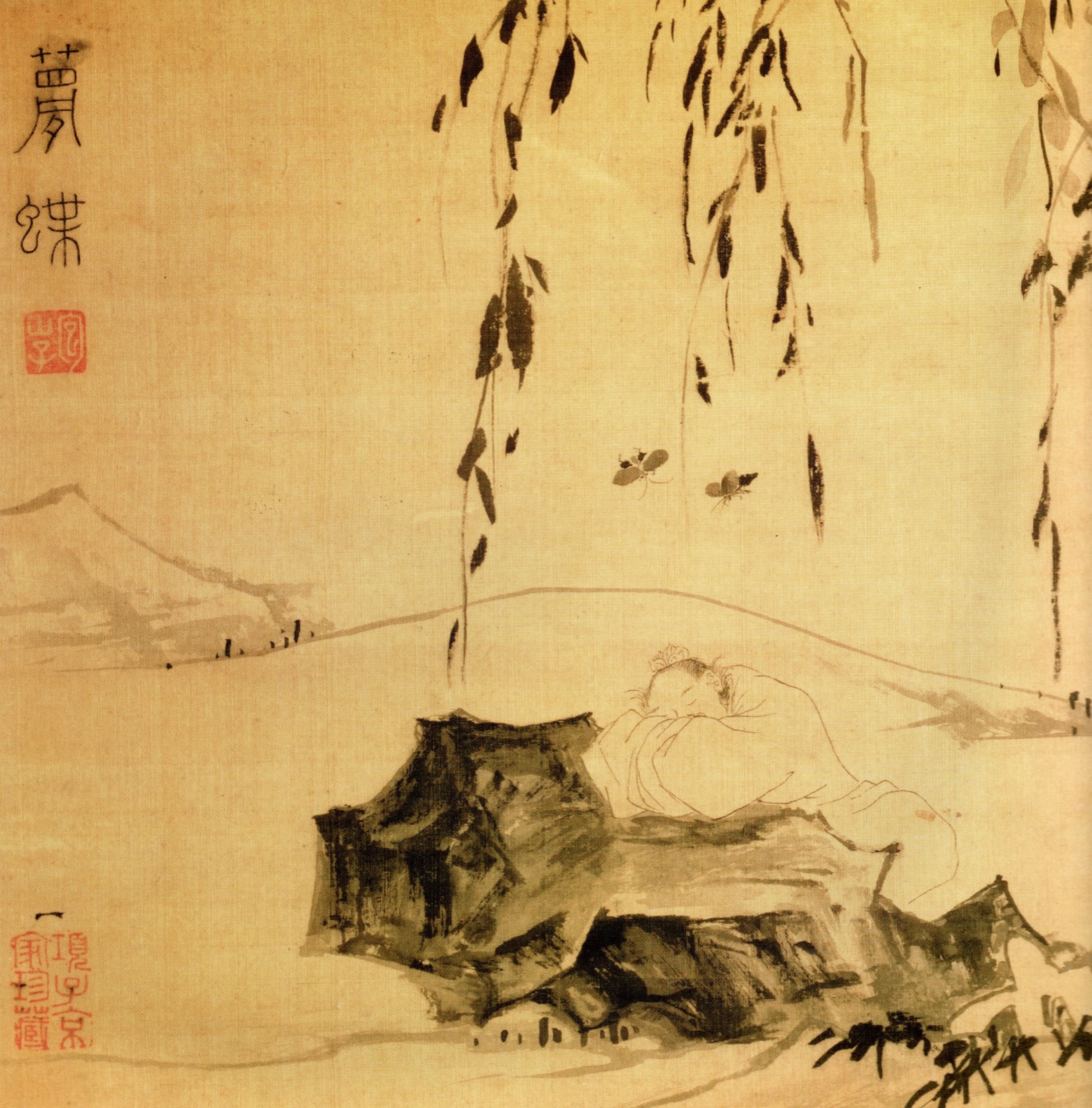
The Butterfly Dream
The most famous passage illustrates the text's approach:
"Once I dreamed I was a butterfly, fluttering about happily. I did not know I was Zhuangzi. Suddenly I awoke and I was definitely Zhuangzi again. But now I do not know whether I was Zhuangzi dreaming I was a butterfly, or whether I am now a butterfly dreaming I am Zhuangzi."
This is not epistemological skepticism but an invitation to question the solidity of the self. The separate "I" is revealed as illusory; identity is fluid.
Key Themes
Uselessness as Treasure: A twisted tree too gnarled for lumber survives while straight trees are felled. The sage cultivates "uselessness" to escape worldly demands.
Relativity and Perspective: No absolute standpoint exists from which to judge value. What appears ugly from one angle is beautiful from another. This teaches not relativism but the dissolution of fixed perspectives.
Forgetting as Liberation: The art of forgetting—forgetting rules, forgetting the self, forgetting distinctions—returns one to primordial wholeness. This forgetting is not unconsciousness but clarity before thought.
Transformation: The text celebrates change, fluidity, metamorphosis. The sage moves with circumstances like water finding the shape of its vessel.
Influence and Integration
When Buddhism reached China, the Zhuangzi provided crucial conceptual tools. Zen koâns echo its methods: paradox, reversal, the inadequacy of words, the sudden breaking of conceptual mind. The dialogue between Zhuangzi and Confucius became a template for all Taoist critiques of rigid moralism.
Related
Where this connects.
Keep exploring
Return to the full directory, browse by texts & scriptures, or see how this shapes our own programs.