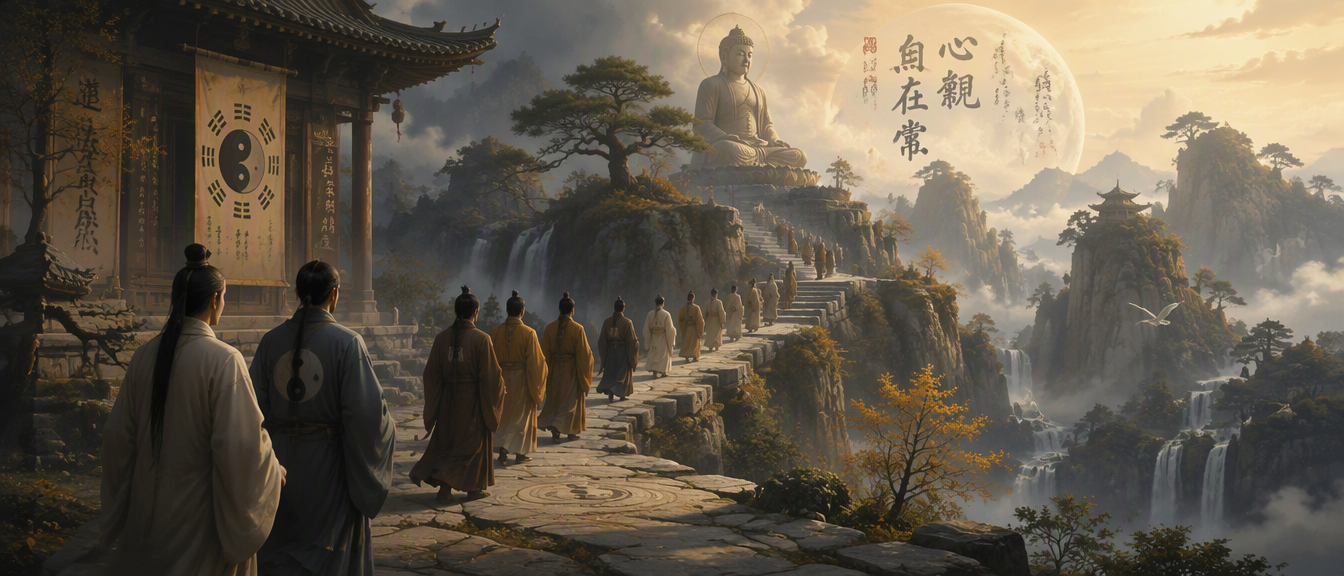
Mountain geography as a contemplative context
Nepal’s Himalayan landscape offers practical conditions for reflective practices: variation in altitude, pace, and seasonal rhythm that supports long-form attention and seasonal programming.
01 / Why Nepal
Geography, culture, and social rhythm are not background details. They decide what kind of practice model can actually endure.
02 / Conditions
Nepal’s Himalayan landscape offers practical conditions for reflective practices: variation in altitude, pace, and seasonal rhythm that supports long-form attention and seasonal programming.
The spiritual, educational, and civic setting supports respectful cross-dialogue between contemplative traditions and modern civic planning.
Many local organizations already operate through volunteer and volunteer-education models, enabling pilot pathways that are grounded and manageable.
Nepal can host both in-person and remote participation models with a practical bridge between local and international participants.
Smaller population clusters make pilot feedback cycles tangible and help prevent over-built plans.
River systems, agricultural rhythms, and mountain ecosystems encourage practical stewardship principles in program design.
Existing social etiquette and hospitality systems can sustain respectful listening frameworks where participants feel safe and seen.
There is practical demand for structured attention education among educators, community mentors, and early learners.
03 / What it unlocks
This setting supports retreat rhythm, community-scale learning, and ecological awareness practices — at a pace pilots can survive.
Programs begin with people who already gather, rather than building an audience from nothing.
Material is prepared bilingually so no participant has to translate on the spot.
Seasons, monsoon, and altitude set the calendar rather than an arbitrary quarterly grid.