Texts & Scriptures
Taiping Jing — The Classic of Great Peace
A vast revealed scripture (600+ scrolls in original form) claiming heavenly origin, central to early religious Taoism and the Yellow Turban rebellion. Teaches that a coming age of Great Peace (Taiping) will restore cosmic harmony, and that the virtuous can accelerate this transformation.
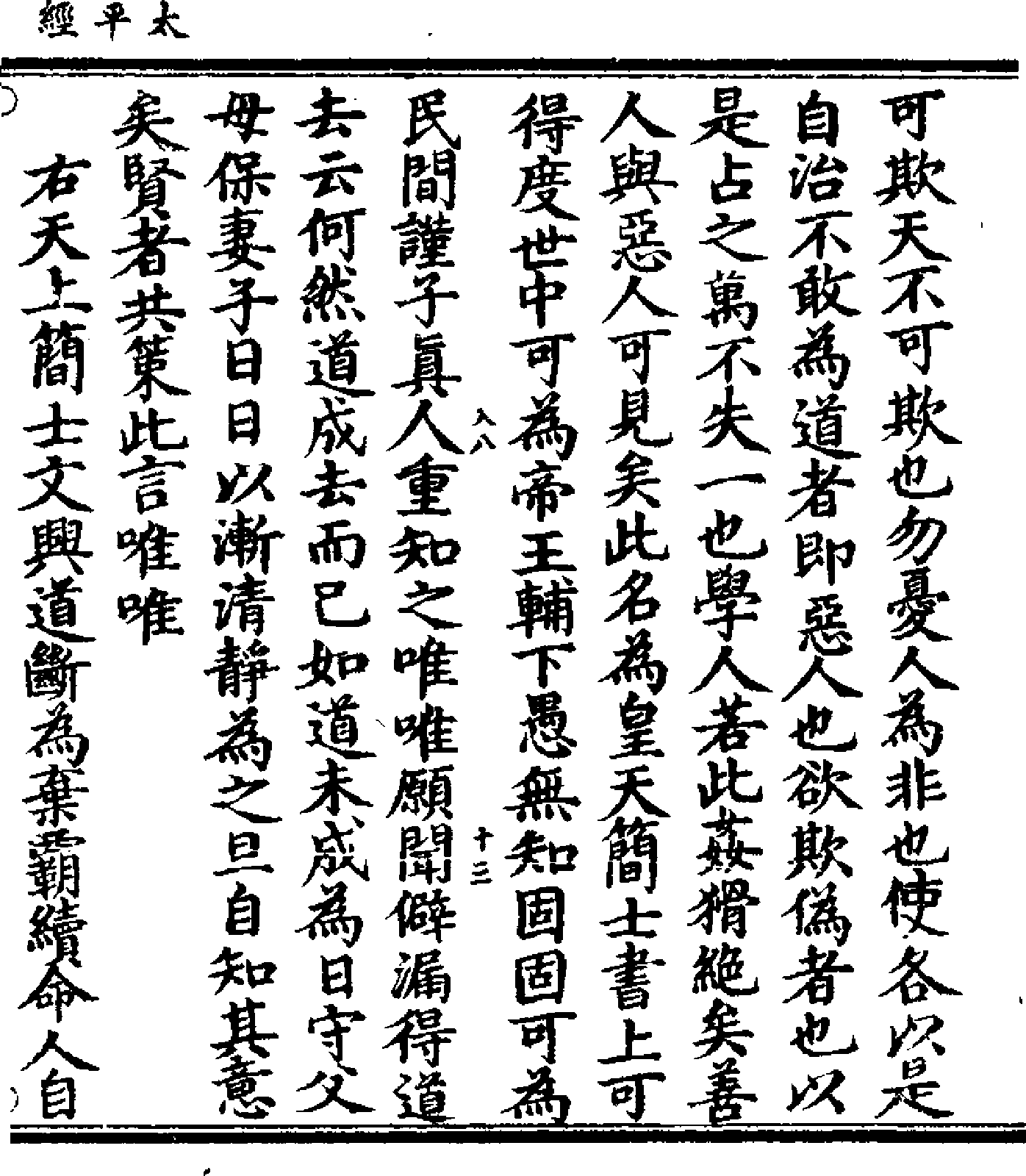
The Taiping Jing represents a revolutionary moment in Chinese history—the fusion of Taoist mysticism with messianic expectation, culminating in the first mass religious movement in Chinese history.
Revelation and Authority
The text claims to have been revealed to a sage named Yu Ji in the 2nd century CE by celestial beings. Unlike older philosophical texts, the Taiping Jing presents itself as direct heavenly communication, not human wisdom. This claim to celestial authority gave it immense power among those seeking spiritual and social transformation.
Cosmological Vision
The text teaches a cyclical cosmology: cosmic ages move through phases, each with characteristic qi and spiritual conditions. The present age is one of decline and chaos. But through virtue and practice, humanity can align with the coming age of Great Peace (Taiping), restoring harmony between heaven, earth, and humanity.
This is not a passive waiting for salvation but an active participation in cosmic transformation. Every virtuous deed, every meditation practice, every healing ritual contributes to the transition.
Revolutionary Implications
In the hands of Zhang Jue and the Yellow Turbans (184 CE), these teachings became revolutionary:
- The cosmic age of chaos justified overthrowing the current dynasty
- Taoism had an organized structure with hierarchies and rituals
- Healing practices gave the movement appeal among the suffering masses
- Messianic expectation mobilized believers into action
The rebellion failed militarily but succeeded historically—it established religious Taoism as a social force that would shape Chinese society for centuries.
Spiritual Teachings
Beyond its revolutionary implications, the Taiping Jing teaches:
- The unity of heaven and humanity (humans can influence cosmic transformation)
- The power of virtue to shift reality
- The correspondence between inner states and outer conditions
- That true leadership comes from moral authority, not force
Legacy
The text influenced all subsequent Taoist sects. Its vision of cosmic transformation and the possibility of human participation in heavenly affairs became central to Taoist spiritual practice. Even today, concepts from the Taiping Jing shape Chinese folk religion and spirituality.
Keep exploring
Return to the full directory, browse by texts & scriptures, or see how this shapes our own programs.