sacred mountain Anhui
Mount Qiyun
The cloud-touching mountain of southern Anhui
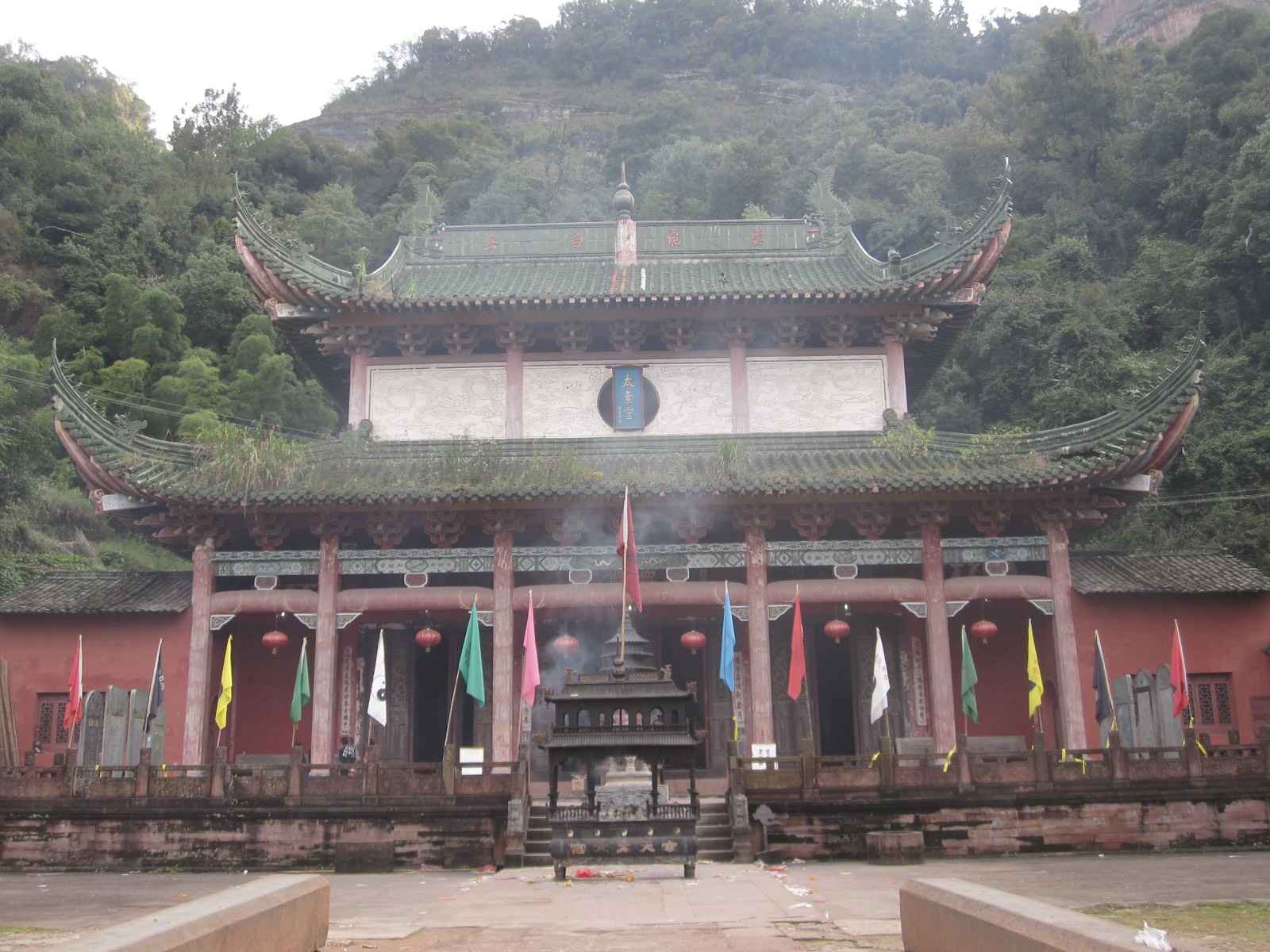
One of the four major mountains historically associated with organized Taoist practice in China (alongside Wudang, Longhu, and Qingcheng), Qiyunshan developed as a regional pilgrimage center in southern Anhui from the Tang dynasty onward, its name — 'level with the clouds' — describing the sheer red sandstone cliffs and temple complexes that appear to merge with the sky.
Sacred narrative
The mountain of red cliffs and cloud
Qiyunshan's distinctive red sandstone geology — dramatic cliff faces, natural stone bridges, and caves carved by centuries of water erosion — was read by Taoist tradition as itself a sign of the mountain's concentrated qi, its vivid coloration and vertical drama marking it as a site where heaven and earth meet unusually closely. Taoist temples and hermitages were built into and among these formations from at least the Tang dynasty, with practitioners drawn to the mountain's caves for solitary meditation retreat, continuing the broader Taoist pattern of seeking dramatic, qi-concentrated natural landscape as the appropriate setting for serious cultivation.
History
Founded Taoist temple presence from the Tang dynasty; major development and imperial recognition during the Ming dynasty.
Key figures
- Zhang Sanfeng (semi-legendary), traditionally associated with visits to the mountain
Major events
- Tang dynasty: earliest recorded Taoist structures on the mountain
- Ming dynasty: significant temple expansion and imperial patronage
- Modern era: recognized as a national scenic area alongside its continued religious function
Today
The site as it currently stands.
Cable car and hiking trails from the base town of Qimen or nearby Xiuning; well-maintained tourist infrastructure
March-May and September-November
Huangshan City, Anhui
Small resident Taoist community; primarily visited as a scenic and cultural heritage destination
moderate
Back to the geography
Return to Sacred sites, or read the concepts practised there.