sacred mountain Shanxi
Mount Heng (Beiyue)
The Northern Peak, relocated by imperial decree
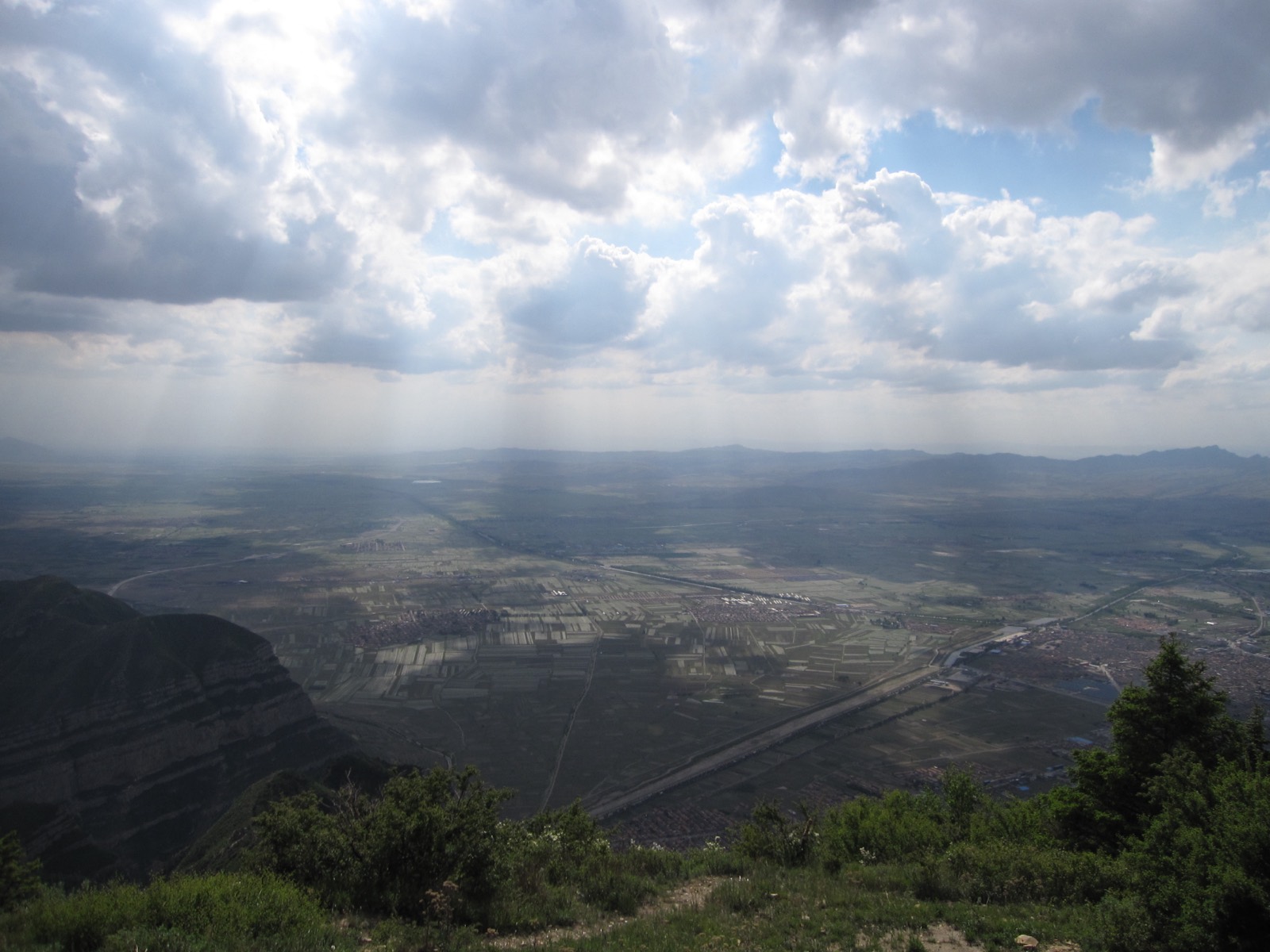
The Northern Peak (Beiyue) of the Five Great Mountains — a distinct mountain from the Southern Peak above despite sharing the same English romanization "Heng" for two different Chinese characters. Beiyue's history includes an unusual administrative episode: the mountain historically worshipped as the state's Northern Peak sacrificial site sat at Quyang, in what is now Hebei, but in 1660, during the early Qing dynasty, the imperial court officially transferred the state sacrifice to the mountain at Hunyuan in Shanxi, which is the site recognised as Beiyue today. Nearby stands the Hanging Temple (Xuankong Si), a cliff-face temple representing the syncretic "Three Teachings" tradition of combined Buddhist, Taoist, and Confucian worship, though it is not itself a Taoist institution.
Sacred narrative
The cult of Beiyue Dadi, God of the Northern Peak
Like the other four of the Five Great Mountains, Beiyue was, in imperial cosmology, the seat of a specific cardinal-direction deity — Beiyue Dadi, the God of the Northern Peak — one of five great mountain-gods understood to anchor and stabilise the compass points of the empire. The mountain's unusual administrative history, in which the physical site of official worship was relocated by decree after centuries of continuous sacrifice at a different location, is itself part of what makes Beiyue distinctive among the Five Peaks: it is a reminder that even a "sacred mountain" of this stature was, in practice, also a matter of state classification, capable of being formally redesignated. The temple complex at Hunyuan today continues the mountain-god cult in its current, officially recognised location.
History
Founded State sacrificial site from the Han dynasty (originally at Quyang, Hebei); relocated by imperial decree to Hunyuan, Shanxi in 1660.
Key figures
- Qing Shunzhi Emperor (1660 decree relocating the state sacrifice to Hunyuan)
Major events
- Han dynasty onward: state worship of the Northern Peak established at Quyang, Hebei, where the historic Beiyue Miao temple still stands
- 1660: the Qing court officially transfers the state sacrifice to the Hunyuan, Shanxi site now recognised as Beiyue
- Ongoing: the mountain temple complex at Hunyuan is maintained as an active pilgrimage site
Today
The site as it currently stands.
Road access from Hunyuan town; a cable car serves the upper temple complex
May–October
Hunyuan, Shanxi; Datong (nearest major city and airport)
Active Taoist clergy maintaining the mountain temple complex
sparse
Back to the geography
Return to Sacred sites, or read the concepts practised there.