high deity Administration of Heaven and the human world in popular cosmology
The Jade Emperor
The supreme administrator of Heaven in Chinese popular religious cosmology — a celestial bureaucrat-emperor who presides over a court of officials mirroring the imperial state, and the most widely recognised Taoist-associated deity among ordinary worshippers.
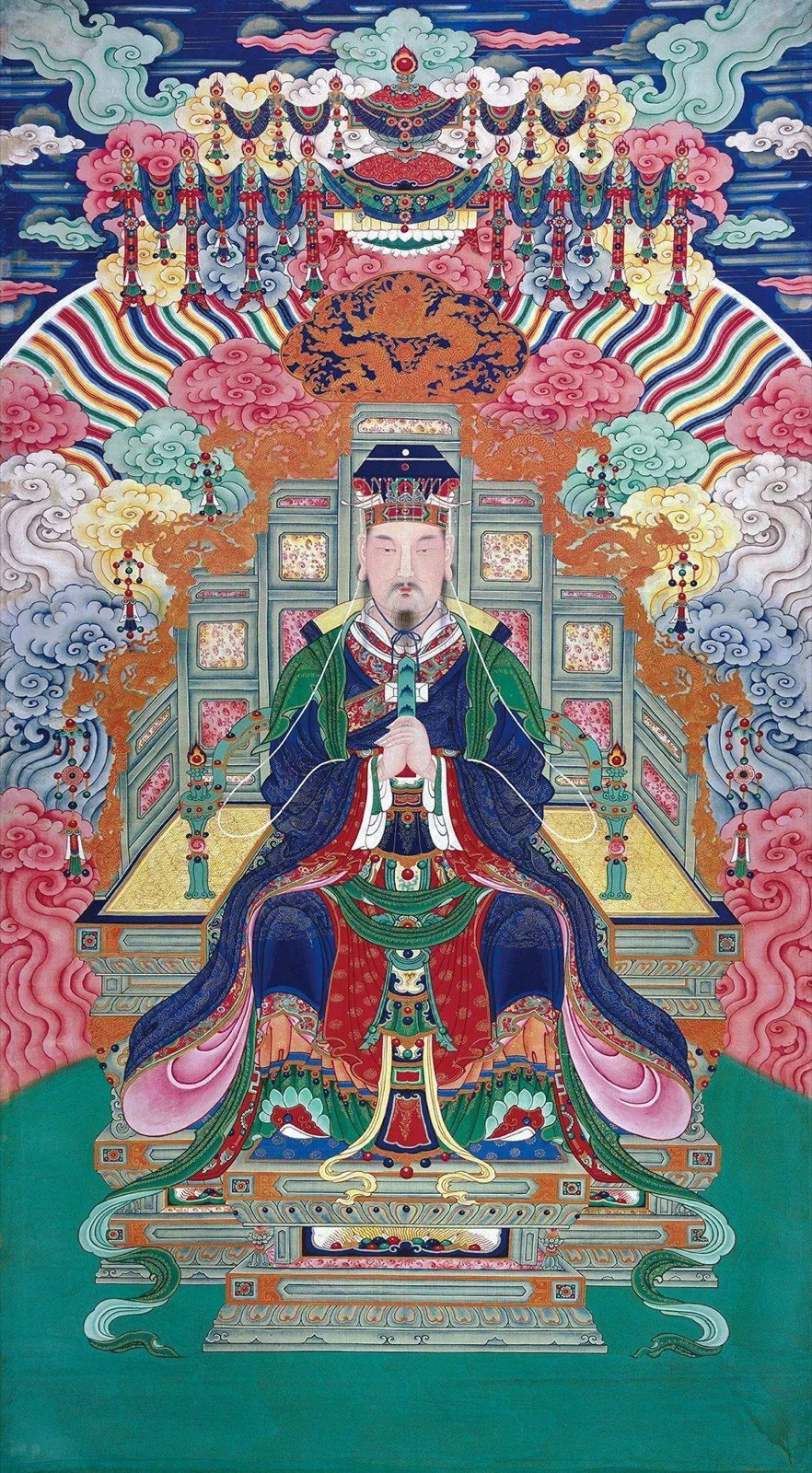
The Jade Emperor occupies a curious position: theologically subordinate to the Three Pure Ones in formal Taoist doctrine, yet, in the lived religious world of temple fairs, household shrines, and popular festival, by far the more commonly invoked figure. His cosmology imagines Heaven as a mirror of the earthly imperial bureaucracy — the Jade Emperor presiding over a vast court of ministers, generals, and local officials (including, famously, the Kitchen God, who reports each household's conduct to him annually at Lunar New Year) — a structure that let ordinary worshippers understand celestial order through the familiar logic of an imperial administrative state.
His cult developed gradually through the medieval period and was given formal state recognition under the Song dynasty, when emperors incorporated Jade Emperor worship into official state ritual. He is honoured most prominently at Lunar New Year, when households traditionally see off the Kitchen God to deliver his report and welcome the returning celestial administration for the new year, and on his own festival on the ninth day of the first lunar month. Because his cult sits at the meeting point of formal Taoism and diffuse Chinese popular religion, he is often the first deity a general audience associates with "Taoism," even though doctrinally he ranks below the Three Pure Ones.
Iconography
An emperor in full dragon-robed imperial regalia, seated on a throne, holding a ceremonial tablet
Epithet
The ruler of Heaven in popular devotion
Festival: 9th day of the 1st lunar month
Back to the pantheon
Return to Pantheon, or read the concepts behind these figures.