immortal Filial devotion, purity, and household protection
He Xiangu
A Tang-dynasty girl from Guangdong who, after eating a peach or mother-of-pearl given to her in a dream by a spirit, ceased needing ordinary food, gained the power of untiring travel, and eventually ascended to immortality — the only woman among the Eight Immortals.
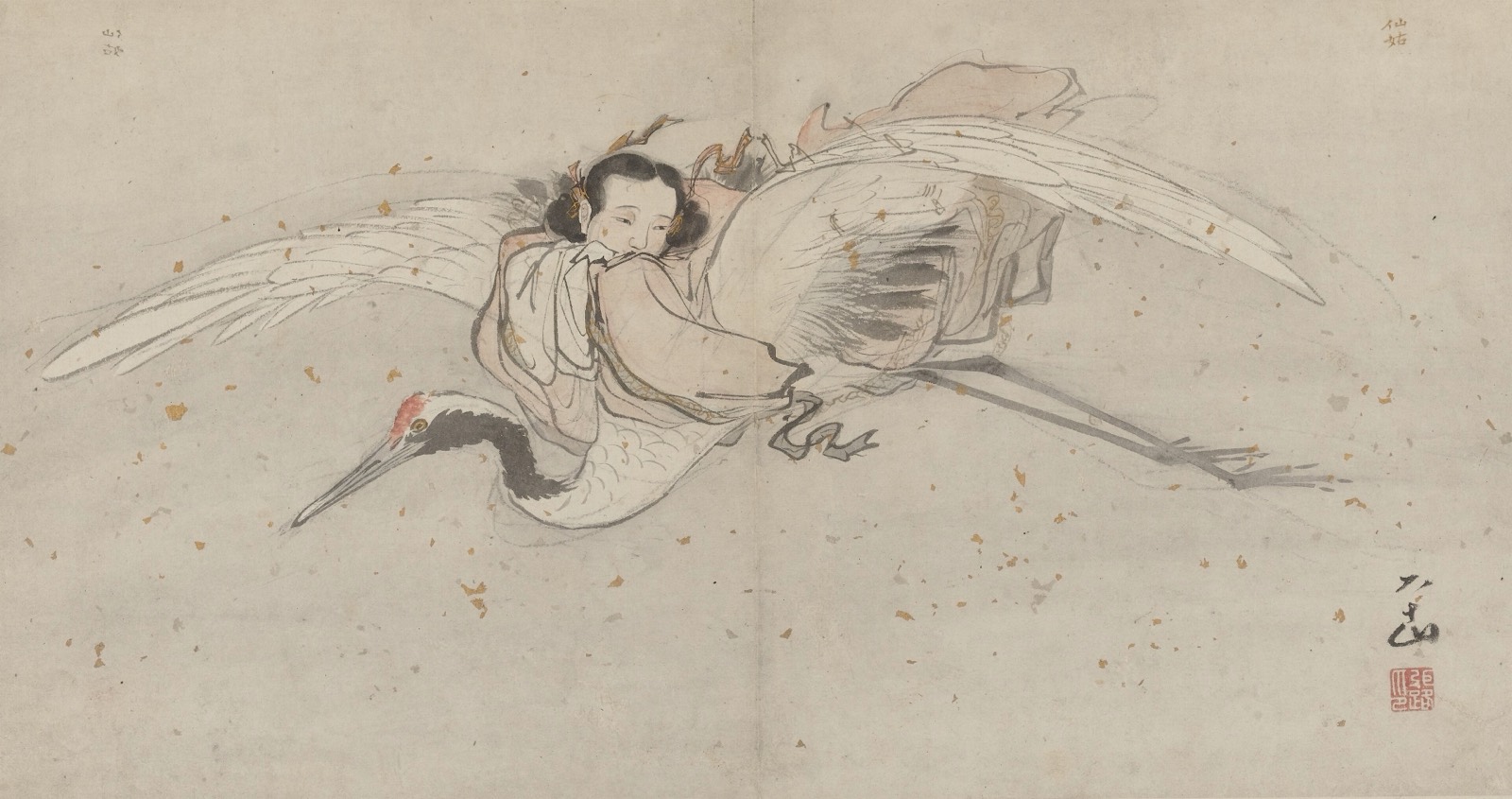
Accounts of He Xiangu's origin vary by region and period, but the core elements recur across most tellings: as a young unmarried woman, she received an instruction in a dream — commonly to eat a magical peach, or powdered mother-of-pearl, or the moss of a sacred stone — after which she found she no longer needed to eat ordinary food and could move across mountains with unnatural speed and endurance, returning each evening from wherever she had wandered with wild fruit for her mother. Her steadfast refusal of marriage, read in most versions as a mark of her single-minded devotion to cultivation, became inseparable from her identity as the group's one female immortal.
She is typically depicted carrying a lotus flower, an attribute tied both to purity and to her connection with feminine self-cultivation, and is venerated by women in particular as a model of chastity, filial devotion to one's mother, and the possibility of attaining the Dao while still young and without renouncing an ordinary rural life. Within the Eight Immortals' shared iconography — a group otherwise defined by old age, physical disability, or social marginality — He Xiangu's youth and purity mark the group's deliberate inclusiveness: immortality, the set as a whole insists, is not reserved for any single type of person.
Iconography
A young woman in simple dress carrying a lotus flower or a ladle, sometimes a winnowing basket
Epithet
The Immortal Maiden He, sole woman among the Eight Immortals
Back to the pantheon
Return to Pantheon, or read the concepts behind these figures.